Labor Repose
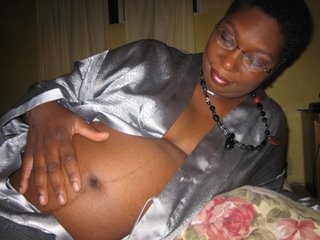
LaborPayne during her 6th homebirth (9th baby) at age 44
Sunday, October 4, 2009
The Spirit Catches You and You Fall Down
I've started reading one of the two books I purchased at the conference on cultural competency called, "The Spirit Catches You and You Fall Down: A Hmong child , her American doctors and the collision of two cultures." The other book was about medical missions. Spirit catches you is the well written assessment of what happens when a non-English speaking refugee family intercepts with the American healthcare system. It is a riveting story, though the author at times becomes bogged down in clinical analysis. I remember the Hmong refugees. I was a young teen in the 1980s when they seemingly 'invaded' the housing project where one of my aunts lived. They were quiet solitary people who kept to themselves. I could only imagine how foreign our world must have seemed to them. Could anyone have possibly chosen two more unalike populations to put together- Hmong refugees fresh from the mountains placed in the urban core housing projects with low income Americans, mostly African-American? Each group kept to themselves and there were few clashes, but only because there was no interaction. Each eyed the other suspiciously as I recall. In the book, the Hmong parents of the story present to the emergency room with a child afflicted by seizures. Since they don't speak English and this is prior to the time of having interpreters on staff- the doctors don't know what the problem is. It takes several visits, until the child is brought in still in the throes of a seizure, for them to figure it out. The book goes on to catalog the highs and lows of treatment for this child with all miscommunication and misunderstanding that accompanies their interactions. It is a fascinating read- amusing in some places, heartbreaking in others. It makes me want to work harder to impress upon my students the importance of taking the time to understand the health beliefs of the person for whom you are caring. It's also changed my mind about another thing. It is not enough to seek patient compliance as the highest goal for the nurse's efforts, but rather client collaboration. The healthcare consumer has to have buy-in. Clinicians and consumers must work together to create and individualized plan of care- this is the only way, in fact, that it can be individualized- the individual has to help create it. We in our authoritative cloak cannot arbitrarily decide what is best for someone else. For true healing, rather than merely curing, to take place, we need to involve the body, mind, and spirit of the client. All of these aspects of the person are embraced by culture. In the book, progress begins to be made, when a few astute clinicians, inadverdantly begin to ask some of Kleinman's Questions, such as what the child's illness means to the parents. I can't wait to finish this book.

Saturday, October 3, 2009
What is Cultural Competency?
I attended a conference yesterday (what a shock right! Everyone must think I have a hidden trust fund to attend all these conferences, when really I'm just resourceful and I live in a metropolitan area that has lots of conferences to choose from). The topic was cultural competency. I attended because, 1. I think cultural incompetence feeds greatly into health disparities which greatly impacts the health of African-Americans and Latinos, and 2. I guest lecture on the topic and felt the need for more info, and 3. it was free to nursing students of the school I attend where I'm working on my masters.
What a lovely conference! It was hosted by INMED whose focus is international medical missions, so the focus was more on healthcare professionals dealing with clientele from other countries of origin, but as we all know there are plenty of American subcultures that are misunderstood by the majority of healthcare providers, whether those subcultures are characterized by race, class, religion, region, language linguistics, language dialect, health literacy levels or any other number of factors. The conference did an fairly nice job of pointing to the fact that healthcare is a 'foreign culture' unto itself.
(I have long been an ardent supporter of this philosophy. Healthcare has its own language, its own mode of dress, its own customs, power systems, etc. Since it is populated mostly by educated caucasians, their norms have become the norms of the this 'foreign culture' we call healthcare. So even caucasians entering the healthcare system to some extent have to step into this culture in the 'patient' role. Everyone else has that to contend with putting on the patient role plus whatever cultural divides exist, known and unknown.)
The sessions were on such topics as, 'Health thru the lens of culture,' Health beliefs and traditional health practices,' 'Health disparities in relation to cultural identity,' Defining culture and cultural competency,' and much more. Fabulous topics all. The most practical information was Kleinman's Questions which are 8 questions this researcher came up with for pulling out the health beliefs (or illness narrative as one speaker so eloquently put it) of the healthcare consumer- so if you learn to incorporate these questions into your history taking, it doesn't matter if the patient is from the same or a different culture than your own. Almost every speaker quoted Kleinman's Questions so google it for yourself to find out what they are. I'm incorporating them into my history taking lab for my students.
At lunch I approached a table of older caucasian gentlemen. (This is how I challenge myself now, to sit at a table of folks I don't know and suspect that I don't have much in common with.) After polite introductions we launched into an animated discussion on what cultural competency looks like in our individual practices. There was a surgeon (I think he was a cardiologist, but he never said), a homehealth case manager/manager who was a nurse, a home health physical therapist, and me, a nurse educator. The surgeon made the (for me) shocking but typical statement that it was enough that he was kind and polite to everyone he saw, that was his idea of cultural competence. I reminded him that he could very politely offend the hell out of someone by not understanding the customs or health beliefs of their given culture. As we talked more the nurse manager gave many excellent examples of how he ammended his care to the cultural needs of the client, but the surgeon really didn't get it. I told him I could 'blow his mind' with some examples of things he didn't know about his African-American client's health beliefs that he probably wasn't taking into account when he treated them. "Name me three," he challenged me. Only three? Sure.
All in all a fabulous conference and time well spent.
Have you looked up Kleinman's Questions yet?
What a lovely conference! It was hosted by INMED whose focus is international medical missions, so the focus was more on healthcare professionals dealing with clientele from other countries of origin, but as we all know there are plenty of American subcultures that are misunderstood by the majority of healthcare providers, whether those subcultures are characterized by race, class, religion, region, language linguistics, language dialect, health literacy levels or any other number of factors. The conference did an fairly nice job of pointing to the fact that healthcare is a 'foreign culture' unto itself.
(I have long been an ardent supporter of this philosophy. Healthcare has its own language, its own mode of dress, its own customs, power systems, etc. Since it is populated mostly by educated caucasians, their norms have become the norms of the this 'foreign culture' we call healthcare. So even caucasians entering the healthcare system to some extent have to step into this culture in the 'patient' role. Everyone else has that to contend with putting on the patient role plus whatever cultural divides exist, known and unknown.)
The sessions were on such topics as, 'Health thru the lens of culture,' Health beliefs and traditional health practices,' 'Health disparities in relation to cultural identity,' Defining culture and cultural competency,' and much more. Fabulous topics all. The most practical information was Kleinman's Questions which are 8 questions this researcher came up with for pulling out the health beliefs (or illness narrative as one speaker so eloquently put it) of the healthcare consumer- so if you learn to incorporate these questions into your history taking, it doesn't matter if the patient is from the same or a different culture than your own. Almost every speaker quoted Kleinman's Questions so google it for yourself to find out what they are. I'm incorporating them into my history taking lab for my students.
At lunch I approached a table of older caucasian gentlemen. (This is how I challenge myself now, to sit at a table of folks I don't know and suspect that I don't have much in common with.) After polite introductions we launched into an animated discussion on what cultural competency looks like in our individual practices. There was a surgeon (I think he was a cardiologist, but he never said), a homehealth case manager/manager who was a nurse, a home health physical therapist, and me, a nurse educator. The surgeon made the (for me) shocking but typical statement that it was enough that he was kind and polite to everyone he saw, that was his idea of cultural competence. I reminded him that he could very politely offend the hell out of someone by not understanding the customs or health beliefs of their given culture. As we talked more the nurse manager gave many excellent examples of how he ammended his care to the cultural needs of the client, but the surgeon really didn't get it. I told him I could 'blow his mind' with some examples of things he didn't know about his African-American client's health beliefs that he probably wasn't taking into account when he treated them. "Name me three," he challenged me. Only three? Sure.
- Your African-American clients don't trust the healthcare system, and by extension don't fully trust you.
- You are not the final authority for your African-American clients, you are at best a second tier authority on health and wellbeing.
- Most if not all your African-American clients indulge in folk medicine practices that you are unaware of.
All in all a fabulous conference and time well spent.
Have you looked up Kleinman's Questions yet?
Sunday, September 20, 2009
Hand Expression and Breast Massage
Thanks to everyone for your comments. I'm glad to get some dialog on this issue. Here is a video recommended by Dr. Smillie for the proper technique of hand expression and breast massage for building milk supply.
The thing that I liked best about Dr. Smillie's approach to lactation assistance, was that the whole thing was mother and baby-led. Of course the name of the conference was, "Baby-Led Breastfeeding." But I always felt uncomfortable being overly dictatorial when helping moms in the hospital. Like so many other things that went on there, it left the patients feeling like we were the experts and they couldn't be successful without us. That's great for making nurses feel good, but not so great for empowering women as mothers. Dr. Smillie (a pediatrician) was all about allowing mom and baby discover one another without the interference of 'professionals.' I loved her videos of babies discovering the breast for themselves, crawling up the belly towards the smell of milk, or making jerking movements down toward the nipple. Babies are so smart- we give them so little credit. I remember (with horror) the time I stood by and witnessed a nurse 'help' a mom and baby by grabbing the mom's breast, and the baby's head, and 'milking' them both for 15 minutes to 'facilitate' a feeding. I stood there somewhat in shock that this very invasive procedure would pass as assisting with breastfeeding (I always had a no touch policy about lactation assistance- but I would still verbally direct and frustrate the mothers). The mother of course learned nothing from this except that she would need the nurse the next time she wanted to feed her baby to hold her breast and her baby's head to 'make' them nurse. Dr. Smillie's approach centered more on asking questions, to help the mother discover for her self was should be done. She also advocated for time for the infant skin to skin with mother to discover the breast on their own. It's been a week now since the conference, and the more I think about the information, the more excited I get. I'm adding significant information to my lactation seminar for my students on practical nursing care, with more emphasis on patient-led dialog and less on nursing interventions. I can see very clearly that there are times when being the 'expert' can interfere with a new mother embracing her own power and autonomy. We don't want to create a patient who is dependent on our expertise, we want to support a mom who can go home and care for her infant with confidence.
The thing that I liked best about Dr. Smillie's approach to lactation assistance, was that the whole thing was mother and baby-led. Of course the name of the conference was, "Baby-Led Breastfeeding." But I always felt uncomfortable being overly dictatorial when helping moms in the hospital. Like so many other things that went on there, it left the patients feeling like we were the experts and they couldn't be successful without us. That's great for making nurses feel good, but not so great for empowering women as mothers. Dr. Smillie (a pediatrician) was all about allowing mom and baby discover one another without the interference of 'professionals.' I loved her videos of babies discovering the breast for themselves, crawling up the belly towards the smell of milk, or making jerking movements down toward the nipple. Babies are so smart- we give them so little credit. I remember (with horror) the time I stood by and witnessed a nurse 'help' a mom and baby by grabbing the mom's breast, and the baby's head, and 'milking' them both for 15 minutes to 'facilitate' a feeding. I stood there somewhat in shock that this very invasive procedure would pass as assisting with breastfeeding (I always had a no touch policy about lactation assistance- but I would still verbally direct and frustrate the mothers). The mother of course learned nothing from this except that she would need the nurse the next time she wanted to feed her baby to hold her breast and her baby's head to 'make' them nurse. Dr. Smillie's approach centered more on asking questions, to help the mother discover for her self was should be done. She also advocated for time for the infant skin to skin with mother to discover the breast on their own. It's been a week now since the conference, and the more I think about the information, the more excited I get. I'm adding significant information to my lactation seminar for my students on practical nursing care, with more emphasis on patient-led dialog and less on nursing interventions. I can see very clearly that there are times when being the 'expert' can interfere with a new mother embracing her own power and autonomy. We don't want to create a patient who is dependent on our expertise, we want to support a mom who can go home and care for her infant with confidence.
Friday, September 18, 2009
Hand Expression? Who Knew?
At the breastfeeding conference I attended nearly a week ago, the speaker said something intriguing. In fact, it's taken me a week to process it- Hand expression as a means of boosting milk supply? It seems too simple to be true- and just about the one thing I didn't try. Could it really be so simple? I both want and don't want it to be true. After all the teas, galactogagues, and tinctures I poured down my gullet, it was never suggested that manual expression might be something to try. I also recently watched a friend suffer this same dreaded fate, and had very little to offer her in the way of practical support or suggestions. I only half-heartedly mentioned the usual offerings since none of them had worked for me. Has anyone out there used manual expression to boost milk supply? I'd love to hear some empirical evidence or personal narratives.
Sunday, September 13, 2009
Breastfeeding, midwives, homebirth
Greatly enjoyed the conference yesterday by Dr. Christine Smilie on baby led breastfeeding. I purchased her CD to show to my classes, and the books, "Pushed" by Jennifer Block, and "Mother's Milk: Breastfeeding controversies in American culture" by Bernice Hausman. I look forward to reading them both. As is the case with most conferences, the best parts can be what happens between sessions.
I got to meet some of the local hospital-based CNMs. I was chewing the fat (as we Midwesterners say) with one of the local homebirth midwives when a CNM stopped by her booth to chat with us. It's always nice for me to see CNMs and CPMs getting along and being nice to one another. Sometimes I feel like a child of divorce since I consider CNMs and CPMs to be equal parents to my dream of being a birth advocate. I hate to see the two camps go at one another. Especially when I know they have more in common than they have differences. Anyway we all made introductions and had a nice chat. It made me realize there are just too few venues for midwives of all types to meet and greet in our city. That is why I love MANA so much. MANA (Midwives Alliance of North America) is having their conference next month and I can't wait to go. It will be in Monterey CA this year so the surroundings should be exquisite. MANA is one American organization that warmly welcomes midwives and birth advocates of all kinds and varieties (and trust me you see some of everything at their annual conference). Its an experience like no other. A lot of midwife organizations segregate by midwife type, but not MANA. Midwives have enough outside opposition without fighting against one another in my opinion, but that's what it's come to- unfortunately. I spent my morning viewing this video that aired a couple of days ago on the Today Show. It's an attack on homebirth (for which I am a staunch supporter) but in all fairness, it shows a bit of the other side as well. All in all it wasn't as bad as I thought it would be. But with ACOG nipping at our heels, we really should be kinder and gentler to one another.
Thanks to the Doulas of Greater Kansas City who put on a wonderful conference yesterday, with a really informative speaker. Lots of food for thought on how we approach lactation education with parents, and learned lots of new stuff. It gave me a new perspective that just as with birth we may be too interventive instead of allowing nature to work as it was intended.
I got to meet some of the local hospital-based CNMs. I was chewing the fat (as we Midwesterners say) with one of the local homebirth midwives when a CNM stopped by her booth to chat with us. It's always nice for me to see CNMs and CPMs getting along and being nice to one another. Sometimes I feel like a child of divorce since I consider CNMs and CPMs to be equal parents to my dream of being a birth advocate. I hate to see the two camps go at one another. Especially when I know they have more in common than they have differences. Anyway we all made introductions and had a nice chat. It made me realize there are just too few venues for midwives of all types to meet and greet in our city. That is why I love MANA so much. MANA (Midwives Alliance of North America) is having their conference next month and I can't wait to go. It will be in Monterey CA this year so the surroundings should be exquisite. MANA is one American organization that warmly welcomes midwives and birth advocates of all kinds and varieties (and trust me you see some of everything at their annual conference). Its an experience like no other. A lot of midwife organizations segregate by midwife type, but not MANA. Midwives have enough outside opposition without fighting against one another in my opinion, but that's what it's come to- unfortunately. I spent my morning viewing this video that aired a couple of days ago on the Today Show. It's an attack on homebirth (for which I am a staunch supporter) but in all fairness, it shows a bit of the other side as well. All in all it wasn't as bad as I thought it would be. But with ACOG nipping at our heels, we really should be kinder and gentler to one another.
Thanks to the Doulas of Greater Kansas City who put on a wonderful conference yesterday, with a really informative speaker. Lots of food for thought on how we approach lactation education with parents, and learned lots of new stuff. It gave me a new perspective that just as with birth we may be too interventive instead of allowing nature to work as it was intended.
Wednesday, September 9, 2009
How not to bathe a baby
http://www.youtube.com/watch?v=WATnDPSs3iI
If you click on the link and watch to accompanying video, it shows a baby being bathed in a hospital setting, right after birth. It is completely inhumane. The infant in brutalized without regard to its fears or pain. I used it in class yesterday to demonstrate two things.
One, how not to bathe a baby. The students were learning infant bathing techniques, and after showing the video I demonstrated a proper infant bath. The students had to return demonstrate later in the learning lab.
Two, how we do not as a matter of course treat infants as aware and sensitive beings. We treat them less than the rest of us, because they are small and lack language. I talked about how we 'casually abuse the neonate at every turn' and gave some examples. The bath video illustrated what I meant beautifully. I also took the opportunity to discuss birth from the neonates perspective and how we give no credence to the neonates experience of birth and difficult transition to extrauterine life.
I'm sure my students all thought that a lecture on caring for normal newborns would be "Cuddles and Hugs 101." Now they know different.
If you click on the link and watch to accompanying video, it shows a baby being bathed in a hospital setting, right after birth. It is completely inhumane. The infant in brutalized without regard to its fears or pain. I used it in class yesterday to demonstrate two things.
One, how not to bathe a baby. The students were learning infant bathing techniques, and after showing the video I demonstrated a proper infant bath. The students had to return demonstrate later in the learning lab.
Two, how we do not as a matter of course treat infants as aware and sensitive beings. We treat them less than the rest of us, because they are small and lack language. I talked about how we 'casually abuse the neonate at every turn' and gave some examples. The bath video illustrated what I meant beautifully. I also took the opportunity to discuss birth from the neonates perspective and how we give no credence to the neonates experience of birth and difficult transition to extrauterine life.
I'm sure my students all thought that a lecture on caring for normal newborns would be "Cuddles and Hugs 101." Now they know different.
Sunday, September 6, 2009
Unnatural Causes
I've been previewing "Unnatural Causes" http://www.unnaturalcauses.org. This is a video series on the social determinants of health. I'm previewing it for my October class. Most of my students think of health in very simple terms. They tend to think of health as being mainly self-determined, whether or not one exercises, or smokes, or consumes a healthy diet, etc. I want to give them a broader picture of the role of education, economics, housing, social policy, municipal prioritization, market forces, federal state and local political will, societal violence, family structure, culture and so many other factors that impact health that are outside of individual control. This series does an excellent job of presenting a realistic if bleak picture. I can't wait to dialog with my students about these issues and of course how they trickle down to impact maternal, infant, and child health.
I acquired my copy of the video when I attended my monthly Health Commission meeting. I am a Health Commissioner for the city of Kansas City MO, where we discuss issues related citizen health and the city policies that impact it. Good work is done by the commission, and while it has no money to throw at problems, it does have the force of political will in it's recommendations to the city council (that does hold the purse strings). The Health Commission has had a key role in changing the status of the city to virtually smoke free. I spread my time between the women, infant, health committee and the minority health committee, depending on which projects and priorities appeal to me.
All of this is shaping my ideas about my own role in public health in my community. I once thought being a front line clinician was the key to effecting change. Once I was doing it, I saw the gross limitations of delivering care one patient at a time. Then I thought, setting policy was the great savior of humanity until I encountered bureaucracies. Now I try my hand at education with a look to the future of broadening my role in activism. This video series is an excellent tool for creating dialog around vital issues.
I acquired my copy of the video when I attended my monthly Health Commission meeting. I am a Health Commissioner for the city of Kansas City MO, where we discuss issues related citizen health and the city policies that impact it. Good work is done by the commission, and while it has no money to throw at problems, it does have the force of political will in it's recommendations to the city council (that does hold the purse strings). The Health Commission has had a key role in changing the status of the city to virtually smoke free. I spread my time between the women, infant, health committee and the minority health committee, depending on which projects and priorities appeal to me.
All of this is shaping my ideas about my own role in public health in my community. I once thought being a front line clinician was the key to effecting change. Once I was doing it, I saw the gross limitations of delivering care one patient at a time. Then I thought, setting policy was the great savior of humanity until I encountered bureaucracies. Now I try my hand at education with a look to the future of broadening my role in activism. This video series is an excellent tool for creating dialog around vital issues.
Subscribe to:
Posts (Atom)